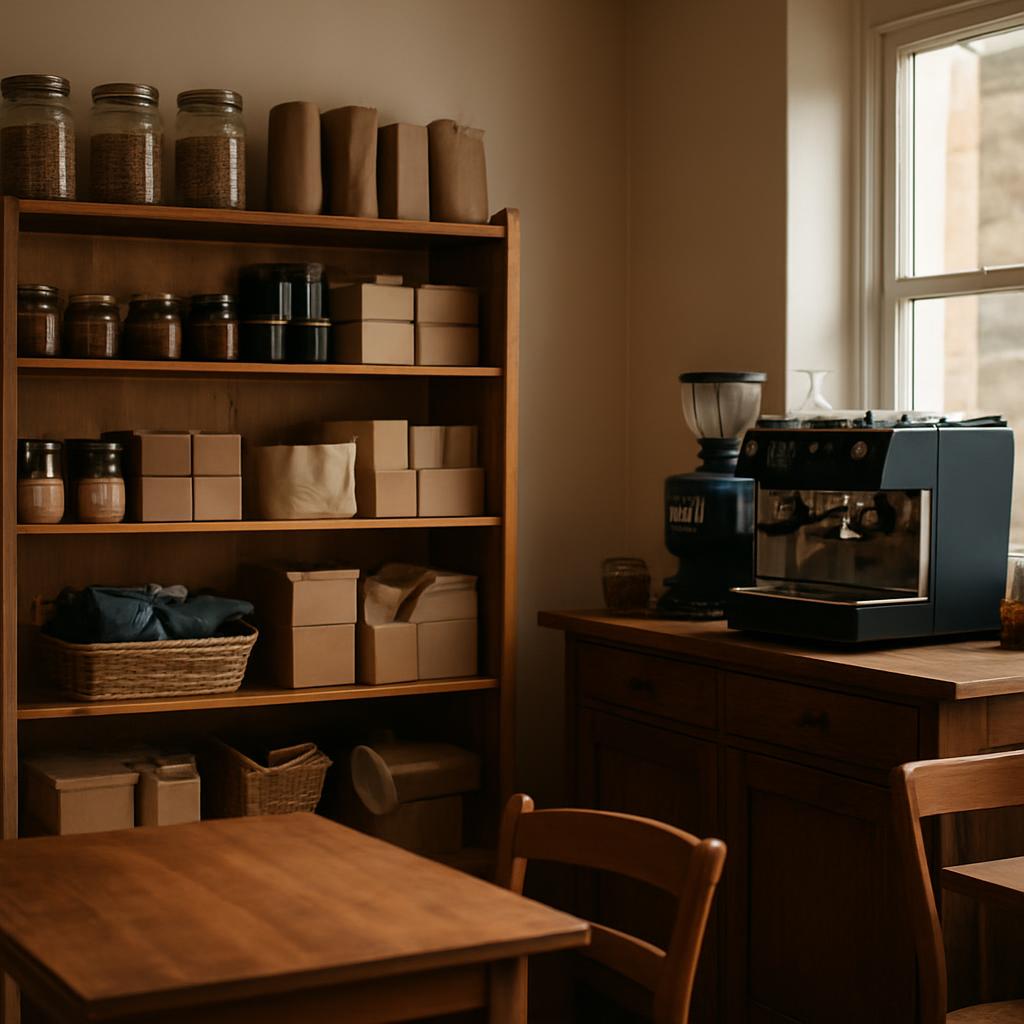
How Cullercoats Businesses Store Smarter
Find Out More →Walk past The Dove and Olive Branch or any of the independent shops dotted around Cullercoats Avenue, and you'd never know how much of their operation depends on what they keep tucked away in storage. But that's exactly the point. Local businesses here have figured out something most homeowners miss: the difference between renting a unit and actually using it well.
The way they approach self storage is cleaner, more deliberate, and honestly, a lot less wasteful than how most of us treat it. And if you're thinking about renting a unit yourself—whether it's seasonal stock, renovation clutter, or just stuff you can't quite part with—there's plenty to steal from how the pros do it.
What makes a business approach different?
Businesses don't rent storage on a whim. They do it because it solves a specific problem, and they measure whether it's working. A seasonal retailer doesn't think 'we might need space someday'—they know they need it for three months every year, and they plan around that cycle.
That clarity matters. When you walk into Self Storage Cullercoats, you'll notice the difference between someone who's thought through what they're storing and someone who's just trying to free up a spare room. Businesses label everything, use the space efficiently, and know roughly what's in there at any given time. They're not surprised six months in when they open a box.
Homeowners, by contrast, often treat self storage like a holding pen. Items go in, and unless you're lucky, they don't come out again. You rent the unit, you fill it, and that's where the relationship ends. Businesses treat it as an active tool. That one habit changes everything about whether storage actually saves you money or just costs you money on forgotten stuff.
How do they stay organised?
Here's what businesses do that homeowners rarely do: they inventory. They keep a list—digital or on paper—of what's in storage and where. If a local hospitality business needs to pull a piece of equipment or a seasonal decoration, they don't spend twenty minutes digging through boxes. They know the aisle, the shelf, the box.
They also rotate stock. Nothing sits in a corner untouched for years. Everything has a purpose for being there, and most of it comes out and gets used or shipped within a set timeframe. It's not sentimental storage—it's functional storage.
For homeowners, applying this means: before you rent a unit, write down what goes in. Label everything clearly—not with a vague 'kitchen stuff' but 'dinner service, 12-place, box 3 of 4'. Take photos. Keep that list somewhere you'll actually see it. When you're storing things seasonally—Christmas decorations, summer garden furniture—set a date to retrieve them. Don't let them calcify in there. As we covered in this guide, the units that work best are the ones where things move in and out regularly.
How much space do they actually use?
Businesses tend to right-size their units because they're paying for it directly from turnover. A gift shop owner isn't going to rent a 100 sq ft unit if they only need 50 sq ft. They'll calculate based on actual volume: how many boxes of stock, what dimensions, what frequency of access.
That precision saves them money. And it's something homeowners often skip. There's a temptation to rent bigger 'just in case', but that's where storage becomes expensive. You're paying monthly for space you're not using. Businesses wouldn't do that, and neither should you.
Before you commit, be honest: what are you actually storing? Measure it. Stack it. Take photos. Then pick a unit that fits that reality, not your anxieties. Find out more about sizing correctly and what realistic costs look like.
What's the biggest mindset difference?
Businesses see self storage as temporary. Even retailers who use units year-round know they're seasonal—stock comes in, sits briefly, gets sold and shipped out. The unit is part of the workflow, not a permanent archive.
Homeowners often slip into permanent-archive thinking. You rent because your spare room is full, and then that spare room stays empty because you don't want to move everything back. The storage unit becomes a second home to your stuff, indefinitely. And once you stop thinking of it as temporary, the friction to retrieve things grows. Why pay £40 a month on something you're not touching?
The lesson here is simple: set an endpoint. If you're storing things while you renovate, know when the renovation finishes. If you're keeping seasonal items, commit to bringing them back when the season ends. If you're keeping things 'just in case', give yourself a deadline to decide: donate, sell, or bring it home. Once storage stops being temporary, it starts being expensive procrastination. Read more here about other common pitfalls worth avoiding.
The practical takeaway
You don't need to run a business to use self storage like one. The formula is straightforward: know what you're storing and why. Label it clearly. Access it regularly—or at least regularly enough to remember it's there. Right-size the unit. Set a deadline for when it stops being necessary.
If you're in Cullercoats and you're thinking about self storage, that's the mindset to bring with you. Self Storage Cullercoats can give you a unit, but the way you use it determines whether it's a smart solution or just an expensive cupboard.
Get in touch and talk through what you actually need. That conversation—the one where you're clear about purpose and timeline—is where it all starts working better.
Looking for Self Storage near Cullercoats?
We have secure, flexible units available in the area. Get in touch with Self Storage Cullercoats today.
Find Out More →